Across Bedford, from riverside apartments to business units on the bypass, energy habits are changing. Households and organisations want control over when they buy electricity, how they use their own solar generation, and how resilient they are during grid interruptions. That’s where modern battery storage steps in. By capturing excess solar or charging from cheaper off‑peak tariffs, a well‑designed system can shift energy to the times you need it most—without changing your daily routine. With today’s reliable hardware, intelligent software, and local expertise, Battery Storage in Bedford has moved from a “nice to have” to a practical upgrade that cuts costs and carbon while improving comfort and continuity.
Whether you’re planning a new solar array in Bromham, retrofitting storage to an existing PV system in Kempston, or looking to manage evening peaks at a small warehouse in Wootton, the right solution will be tailored to your site. Understanding how the technology works, what benefits to expect, and how to size and site equipment is the starting point to making a confident investment.
How Home and Commercial Battery Storage Works in Bedford
At its core, a battery energy storage system (BESS) monitors your property’s electricity flow and stores surplus energy for later use. In Bedford’s domestic settings, there are two common approaches. With DC‑coupled systems, the battery connects on the DC side of a hybrid inverter, making them efficient for new solar installations. AC‑coupled systems add a separate battery inverter to an existing PV setup, a popular choice for retrofits. Both options can be designed to support essential circuits during an outage via an Emergency Power Supply (EPS) or full backup where the site’s wiring and load allow.
Typical capacities range from 5 kWh for compact homes to 10–20+ kWh for larger properties or light commercial premises. Round‑trip efficiency usually sits between 85% and 95%, and intelligent controls schedule charging from solar or low‑cost night tariffs, then discharge during expensive evening peaks. In Bedfordshire, where many homes have electric showers, induction hobs, and EV chargers, the system’s power rating (kW) and how it handles momentary high loads is as important as total capacity (kWh). A thoughtful design will map your “base load” (e.g., fridges, routers, circulator pumps) and “peaky loads” (e.g., kettles, tumble dryers) to match the inverter’s capabilities.
Compliance and safety are critical. Installations should be designed and tested to current UK wiring regulations (BS 7671) and align with the IET Code of Practice for Electrical Energy Storage Systems. Grid connectivity typically requires a G98 notification (up to 16 A per phase) or G99 application for larger systems with Distribution Network Operators (DNOs) serving Bedford. Your installer will assess your incoming supply, earthing arrangement, main protective devices, and whether your consumer unit needs upgrading to accommodate the new equipment. Location matters too: garages, utility rooms, or purpose‑designed plant areas are common because they allow good cable routes, appropriate ventilation, and clearances specified by manufacturers.
For commercial sites—such as offices near Bedford town centre or small factories around Elstow—three‑phase systems can help balance loads, reduce peak import, and support on‑site solar. Smart monitoring platforms provide live data and historical insights, making it easier to fine‑tune charging windows, align with half‑hourly tariffs, and coordinate with EV charging infrastructure. The result is a responsive energy system that evolves with your usage and with changing tariffs.
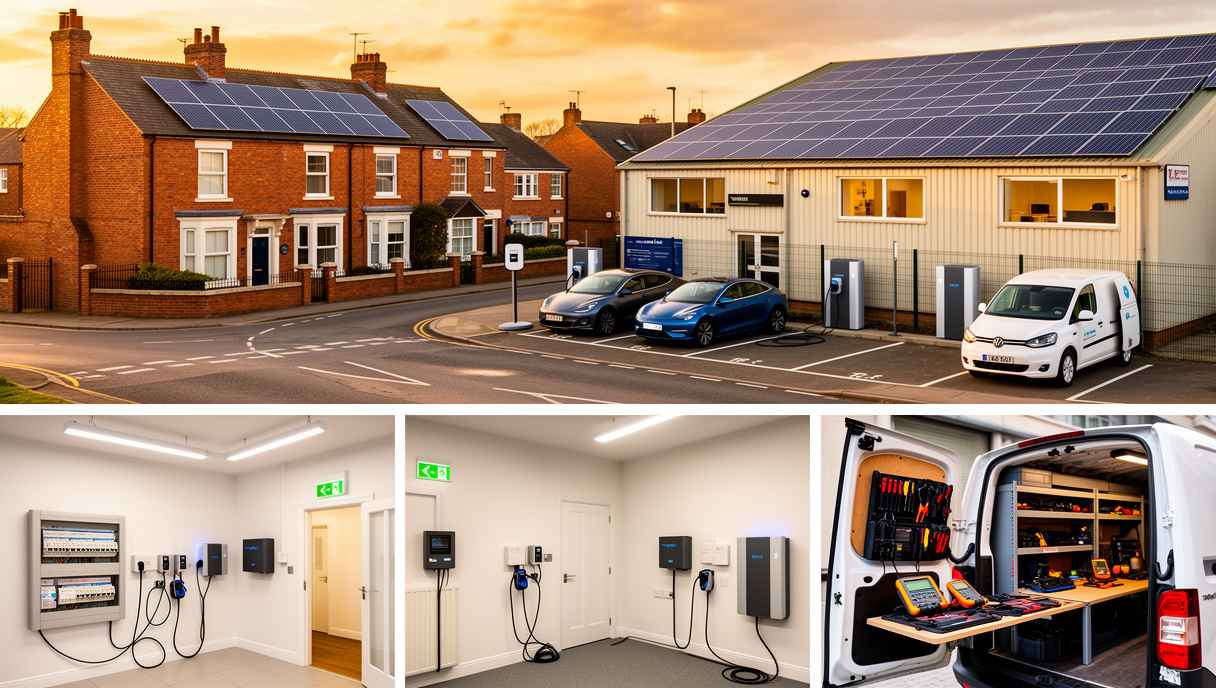
Local Benefits and Use Cases: From Bedford’s Terraces to Business Parks
The value of Battery Storage in Bedford shows up in everyday comfort and predictable bills. In a typical Victorian terrace near the Embankment, a 5–10 kWh battery paired with a modest 3–4 kWp solar array can cover most evening loads from spring through early autumn. The system charges during sunny hours and releases power for cooking, entertainment, and lighting after sunset—reducing grid imports and smoothing out peaks. When winter arrives, intelligently charging at off‑peak rates (where your tariff allows) can still trim costs and give you warm, well‑lit evenings at a lower kWh price. The key is automation: once configured, the system’s software optimises charge/discharge without manual intervention.
Detached homes in Biddenham or Wixams often see even stronger gains thanks to larger roofs for PV and higher evening consumption. With 10–15 kWh of storage, it’s possible to run essential appliances and even support overnight EV charging partially from stored solar or off‑peak energy. Families with heat pumps benefit too—battery storage can buffer short, high‑draw periods and offset expensive tariff windows. Pairing the system with smart controls that understand your heat pump’s schedule, weather forecasts, and solar predictions makes the setup even more efficient.
For Bedford’s small businesses—a café in the Castle Quarter or a dental practice near Goldington Road—battery storage helps in three ways. First, it shaves the most expensive consumption periods, which can be predictable around lunch service or surgery hours. Second, it captures onsite solar that might otherwise be exported at a lower rate, then uses it later on fridges, compressors, ICT, or sterilisation equipment. Third, it supports resilience: with an EPS‑enabled system and a suitably designed backup board, critical loads can continue during outages, protecting stock, servers, and essential services. While precise savings depend on tariffs and usage patterns, the combination of solar self‑consumption and load shifting often provides a compelling case.
Local conditions favour adoption. Bedford’s solar yield is strong for the UK, and time‑of‑use tariffs are becoming more common. Many residents already have EV chargers, making it natural to coordinate battery charging with EV schedules. For sites considering LED lighting upgrades or power‑quality improvements, integrating storage within a broader electrical strategy ensures your investment compounds—each component supports the other to reduce costs, improve reliability, and cut carbon without compromising performance.
Choosing the Right System and Installer in Bedford
Selecting the best battery storage starts with goals. Do you want to maximise solar self‑use, chase off‑peak arbitrage, add backup, or a blend of all three? A home aiming for evening self‑consumption might choose a 7–10 kWh unit with moderate inverter power and forecast‑driven controls. A business planning to cover distinct peaks might prioritise higher power output and modular capacity that can scale. If you already have PV, an AC‑coupled battery can integrate cleanly with your existing inverter; if you’re planning a new array, a hybrid inverter may be more efficient overall. Compatibility with smart meters, export tariffs, and EV chargers should be part of your early checklist.
Look closely at warranties and cycle life. Many systems offer 5–12 year warranties with throughput guarantees. Ensure the small print aligns with your expected usage: frequent charge/discharge cycling for tariff optimisation is different from occasional backup use. Ask how the system handles firmware updates, data visibility, and remote diagnostics. A good monitoring app will show state of charge, live import/export, PV generation, and historical trends—making it easy to spot wins and adjust settings as your habits change.
The installation journey typically includes a site survey, load assessment, DNO notification or application, and a clear plan for siting equipment and running cables. In Bedford’s varied housing stock, cable routes and mounting surfaces can influence where the battery and inverter live—near the consumer unit often works best. Safety devices such as isolation switches, appropriate overcurrent protection, surge protection (where advised), and labelling are crucial. After installation, you should receive commissioning documents, electrical certification, and guidance on using the app and selecting tariff strategies. Periodic checks help keep everything within spec, especially where firmware and tariff options evolve.
Local experience matters. A Bedford‑based installer understands typical supply fuses, local DNO preferences, and how to coordinate with other upgrades like consumer unit replacements, EV chargers, or solar expansions. When comparing quotes, prioritise clear system design notes over brand lists alone. You’re investing in an integrated solution: safe wiring, robust earthing, sensible cable paths, and future‑proofed capacity. For tailored guidance on sizing, compliance, and optimisation for local tariffs and usage, explore Battery Storage in Bedford to align your project with proven regional expertise and responsive aftercare.
As energy markets continue to shift, systems that can learn, adapt, and integrate will deliver the most value. Choosing trusted hardware, meticulous installation, and smart controls gives Bedford homes and businesses a dependable foundation—one that reduces bills today and is ready for tomorrow’s opportunities, from evolving tariffs to vehicle‑to‑home and broader smart‑grid services.

Baghdad-born medical doctor now based in Reykjavík, Zainab explores telehealth policy, Iraqi street-food nostalgia, and glacier-hiking safety tips. She crochets arterial diagrams for med students, plays oud covers of indie hits, and always packs cardamom pods with her stethoscope.